
Product / Food & recipe costing
The price of a tomato, all the way to the plate.
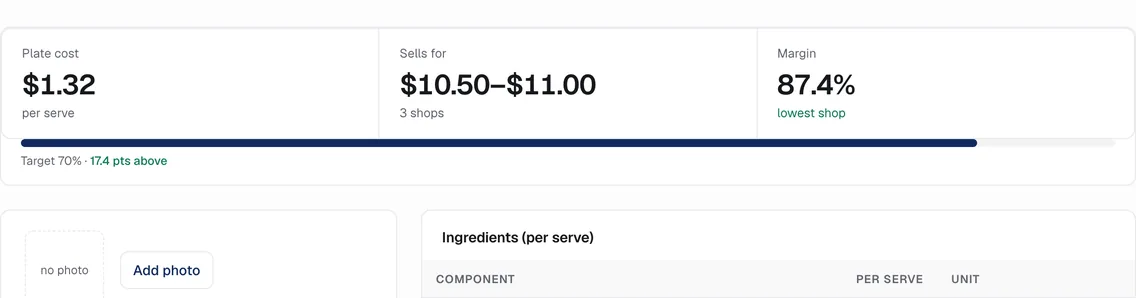
Plate cost comes straight from the ingredient list at current supplier prices. When a price moves on an invoice, every recipe that uses the ingredient recosts, and the margin against target moves with it.
01
A recipe is a bill of materials
Each meal lists its components per serve, including the cup, syrup, milk and straw. Plate cost is the sum at today’s prices. Per-site sale prices sit beside it, so the margin is per site too.
02
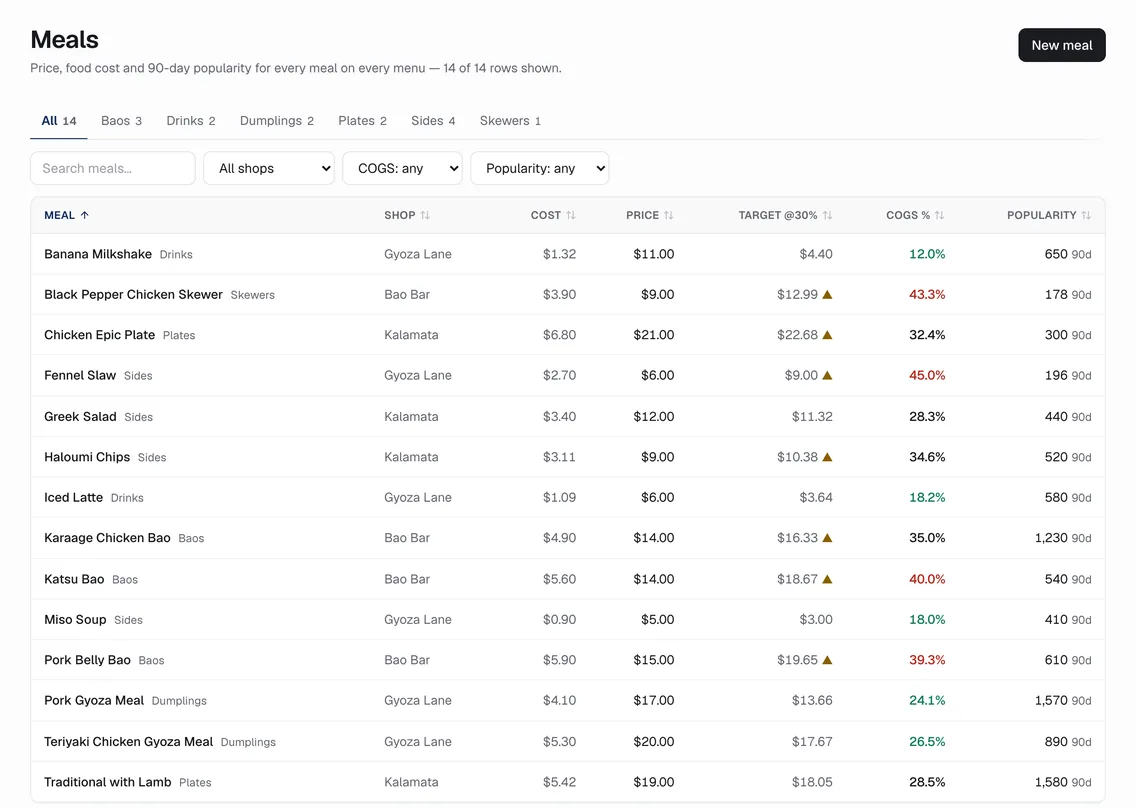
Every meal, ranked by what it costs to sell
Price, food cost, a target price at your target COGS, COGS % and 90-day popularity for every meal on every menu, filtered by shop, by cost band, by how well it sells.
03
One price path
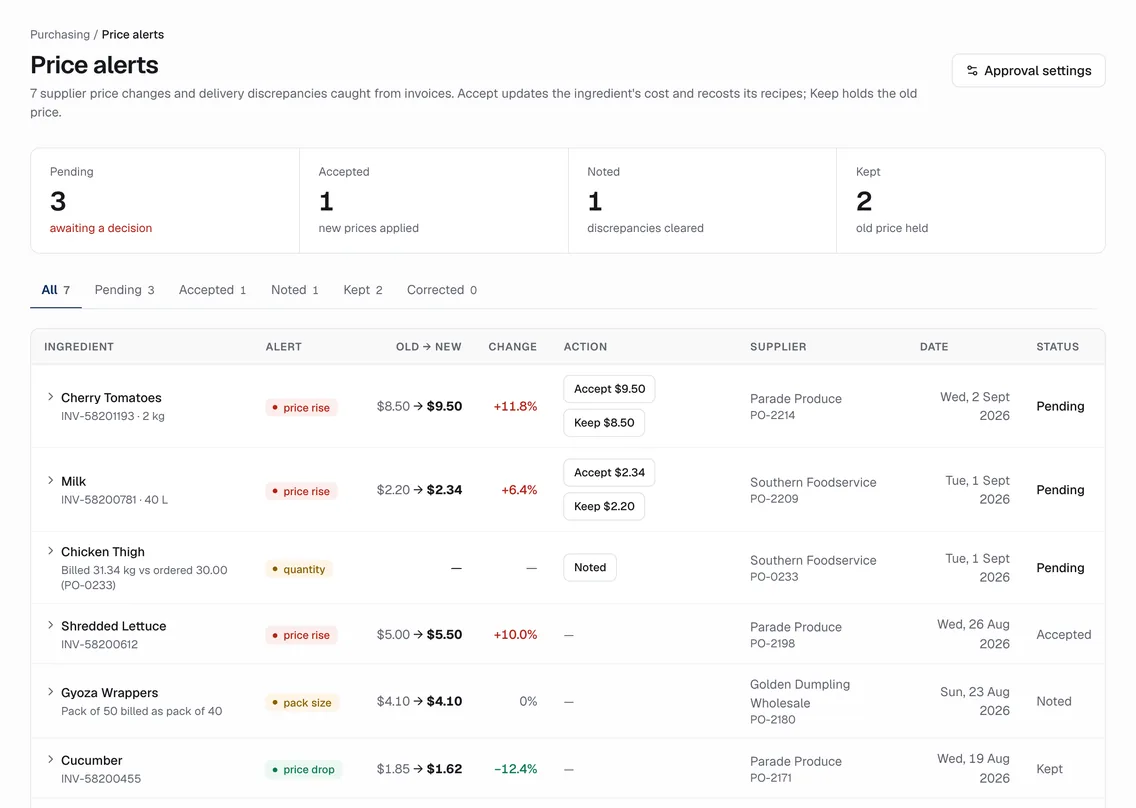
Prices enter through invoice lines. Six kinds of change are caught: rises, drops, quantity and unit mismatches, pack-size changes and substitutions. Each becomes a decision: accept under a manager’s ceiling, keep the old price, or note it. Accepted prices recost components, then meals, then menus. There is no second door.
How it works
The rules behind it.
- Six kinds
- Rise · drop · review · quantity · pack · substitution
- Ceilings
- Managers accept up to their limit; above it, the owner decides
- Audit trail
- An edit log records who changed which recipe, when, and the value before and after
Also in the product
See it on the demo venue group.
No sign-up. Change anything. It only changes for you.